Most Dungeon Masters mishandle McGuffins by treating them as plot mandates. They hand players a quest and expect gratitude. Smart Dungeon Masters do the opposite. They treat McGuffins as invitations. The finest tool in your kit is not the monster manual or the treasure table. It is the spark that makes players believe the adventure was their idea all along.
Four types of McGuffins pull players into adventure better than any other: the rumor, the urgent request, the disrupted pattern, and the clue. Master these and your players will chase your hooks with enthusiasm, believing all the while that they chose the adventure themselves.
The Rumor
Rumors work because they let players chase the story they think they heard. Good rumors create motion without cornering players. They create tension without formal stakes. Players follow the thread because they want to know more, not because you forced the plot to begin.
The Vanishing Caravan
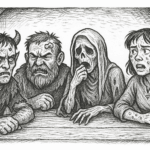
A caravan disappears, and every witness claims a different truth. Someone says raiders. Someone else swears the caravan was seen days later heading into the old woods. A drunken miner insists the wagons were pulled underground by giant hands. None of these details have to be accurate. The caravan master’s spouse knows where it was actually headed. Once the players speak with them, the real quest begins.
Players believe they are uncovering a mystery because they decide which version to trust. You get a natural lead to the actual adventure site.
Making Rumors Work
Keep them contradictory. Conflicting details force investigation. Tie every rumor to a single NPC who converts gossip into a quest. Let players treat rumors as resources they can buy, trade for, or gather during downtime. Never deliver the full truth in the rumor itself. The purpose is to spark movement, not provide answers. When used well, rumors are narrative gravity.
The Urgent Request
This is the classic plea for help, but treat it as a trigger, not the full plot. A messenger collapses. A magical sending cuts off mid sentence. A bloodstained note arrives with no sender. The request is only a spark. The real content lies with whoever sent it.
The Dying Messenger
A rider on a lathered horse collapses in the town square. Before dying, he gasps out fragments. A name. A location. A warning about fire or betrayal. He clutches a sealed letter addressed to someone the party knows. The letter mentions an attack or a kidnapping, but the details are vague. To understand what happened and who needs help, the party must travel to the location.
The physical collapse creates immediate drama. You control how much the letter reveals, and players must do legwork to fill in the gaps.
Making Requests Work
Make them incomplete. Create a ticking clock, real or implied, so players feel pressure to act. Let the request arrive in a dramatic way that disrupts normal activity. The sender should know what they need, but not have time to explain everything. If players have all the information, you have written exposition, not a McGuffin.
The Disrupted Pattern
Anything in the world that suddenly stops functioning as expected can pull players forward. A sacred spring runs dry. The town’s protective ward flickers. The royal falcons fail to return. The disruption itself is the McGuffin. Players want to know what caused it and how far the damage spreads.
The Spring That Runs Dry
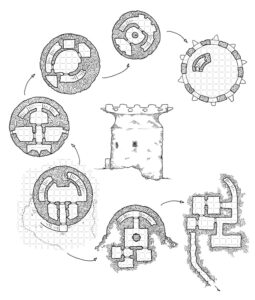
For generations, a sacred spring has provided clean water to a village or monastery. Suddenly, without warning, the spring stops flowing. The ground is cracked and dry. Plants around it wither. Local priests or druids have no explanation. Their rituals produce no result. Investigation reveals that the water flows underground, and something in the depths has diverted or consumed it.
Water is life, and its absence creates existential stakes. The disruption feels unnatural, which suggests a solvable problem. The underground element opens the door to dungeon exploration.
Making Disruptions Work
Choose a pattern that people depend on. If the disruption does not matter, players will not care. Make the cause hidden and non-obvious. The disruption should raise questions, not answer them. Let NPCs have theories, all wrong or incomplete, so players must investigate. Show the consequences spreading or worsening over time. Magic and nature follow rules in fantasy worlds. When those rules break, players feel compelled to restore balance.
The Clue
The clue is the most subtle McGuffin and perhaps the most powerful. Unlike rumors or requests that push players toward action, clues reward players who pay attention. A clue is physical evidence that something happened, something changed, or something lurks nearby. It is the claw marks on stone, the sealed journal beneath a bunk, the spiral symbol carved where it should not be.
The Abandoned Camp
The party discovers a camp in the wilderness. Bedrolls are laid out, a fire pit holds cold ash, supplies are stacked neatly. But no one is here. Investigation reveals details that do not fit. The fire was extinguished suddenly, not allowed to burn out. One tent has claw marks on the inside. A journal sits open to a page describing strange sounds at night. The last entry is unfinished, the pen still resting in the fold.
The scene tells a story without words. Every detail is a question. What attacked? Where did they go? The clue points players toward a specific area or creature, but they must piece together what happened from the evidence.
Making Clues Work
Make them physical and observable. Players should be able to see, touch, or interact with the evidence. Create multiple clues that point in the same direction but reveal different pieces of the puzzle. Reward investigation with specific, actionable information. Never make a single clue the only path forward. If players miss one, others should exist to guide them. Let clues raise more questions than they answer.
Clues respect player agency more than any other McGuffin type. When players follow clues, they believe the investigation is entirely their idea. They feel smart, capable, and invested in the outcome.
Use What Works
McGuffins are not tricks. They are recognition that players need a reason to choose one door over another. The best Dungeon Masters do not railroad. They create sparks and let players chase them. Rumors give players gossip to verify. Requests give them people to save. Disruptions give them balance to restore. Clues give them mysteries to solve. All four create the illusion of an open world while quietly guiding the table toward the content you prepared. That is what real mastery looks like.